Throughout the aviation industry, whether commercial or military, jet engine vibration is an everyday concern. Maintenance, repair, and overhaul crews worldwide are tasked with monitoring aircraft...
Featured

This site is operated by a business or businesses owned by Informa PLC and all copyright resides with them. Informa PLC's registered office is 5 Howick Place, London SW1P 1WG. Registered in England and Wales. Number 8860726.
Aviation Week Marketplace is part of the Informa Markets Division of Informa PLC


Save this service to your Saved Items and return to it later.
As the business and regional aviation sector continues its rapid growth, maintenance, repair, and overhaul (MRO) providers are struggling to keep up with demand. Portable engine-balancing technology allows maintenance teams—even less experienced staff—to perform precise vibration assessment and rapid, oneshot balancing onsite.
Business Jet Fleet Growth Outpaces MRO Infrastructure
The business aviation market has experienced unprecedented growth in recent years, with an increasing number of companies and private owners investing in small business jets for both personal and corporate travel. Increases in fractional ownership models and charter services are also helping drive growth.
According to recent industry reports, the global business jet fleet is projected to grow at a compound annual growth rate (CAGR) of 3.4% through 2034, while the Maintenance, Repair, and Overhaul (MRO) market is expected to grow at a lower CAGR of 3.2% during the same period. Even if jet usage plateaus, fleet size remains higher than pre-pandemic levels and aircraft are flying more hours each year. This expansion has created a structural—not just cyclical—change in the MRO industry. Providers can leverage stronger pricing power as they struggle to manage growing workload & labor shortages while maintaining high standards of service & turnaround times.
On-Site Balancing vs Engine Removal and Shop Work
Engine imbalance is a common maintenance issue caused by factors including blade erosion, foreign object damage, and normal wear. Left unaddressed, imbalance generates excessive vibration that accelerates component wear and can lead to costly repairs or premature part replacement. Traditional maintenance protocols require engine removal, transportation to an MRO facility, balancing on specialized test stands, and reinstallation. This process typically takes several weeks and costs tens of thousands of dollars in labor, logistics, and lost revenue.
Compact, portable balancing systems enable maintenance teams to perform precision balancing directly on small-frame turbofan and turboprop engines used in business and regional jets. These include most major engine platforms, including the Williams FJ44, PWC PT6A, etc. Using precision sensors and intuitive vibration software, technicians are guided through vibration analysis and rapid one-shot balancing in as few as two engine runs.
A typical on-site balancing procedure can be completed in hours rather than weeks, keeping aircraft available. Avoiding extensive downtime is especially crucial in the current environment, where every minute of aircraft downtime can lead to lost revenue and operational inefficiencies.
Reducing MRO Bottlenecks and Maintenance Costs
Fleet growth outpacing MRO capacity has created urgent demand for portable solutions. Building new maintenance facilities requires years and significant capital investment, while business aviation activity continues to expand in regions with limited infrastructure. Portable balancing eliminates engine removal costs, including specialized lifting equipment, transportation logistics, and handling risks. Charter operators and fleet managers can maintain service levels without expanding fixed infrastructure or permanent staff . In fact, balancing systems can be operated by less experienced or specialized MRO staff . On-site balancing also provides immediate feedback on engine condition during scheduled inspections, preventing minor issues from escalating into costly failures.
Onsite Solution: MTI PBS eXpress with Trim Balance Wizard
Vitrek’s MTI PBS eXpress system incorporates decades of vibration analysis expertise into a field-portable package. The system features precision sensors, analysis software, and guided workflows, enabling technicians to perform measurements and corrections with minimal training. Data from each balancing procedure is stored for trend analysis, allowing operators to monitor engine condition over time and optimize maintenance intervals.
Rapid growth in the global business jet fleet is straining MRO capacity and exposing the limits of shop-based maintenance. Portable systems like the MTI PBS eXpress enable fast, precise on-aircraft balancing, reducing reliance on specialized labor while improving flexibility. By eliminating engine removal, lowering costs, and supporting data-driven maintenance, portable balancing delivers strong ROI and a practical solution to today’s capacity crunch.
Throughout the aviation industry, whether commercial or military, jet engine vibration is an everyday concern. Maintenance, repair, and overhaul crews worldwide are tasked with monitoring aircraft...
The CA1800 Charge Amplifier System conditions and amplifies up to eight (8) channels of precision charge-mode accelerometer and other charge mode signals. Features Self contained compact 19 inch...

Replace legacy tracking filters, signal conditioners, and monitoring systems with a single digital platform. Learn how PBS eXpress simplifies test cell architecture, reduces setup time, enables...

The 41CA Two Channel Charge Amplifier is used to convert accelerometer charge signals into voltage signals. Converted signals are then easily used by the PBS-4100 family of vibration analyzers. Two...
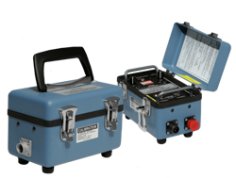
The New PBS eXpress provides most of the features available in upscale large turbine engine on-wing balancing products, but is redesigned specifically for corporate aviation MRO needs — providing...